English
 Türkçe
 French


Description
| Product Code | BS.DFVB.25.50 |
| Weighing Range | 25-50 Kg |
| Weighing Accuracy | ± % 0.2 |
| Bag Type | Polypropylene Bag |
| Weighing Capacity | 25 Kg – 700 Bags/Hour, 50 Kg – 600 Bags/Hour |
| Air Pressure | 5-6 Bar |
| Air Consumption | 40 Liter/Minute |
| Power Supply | 3 Ph, 380 VAC /50-60 Hz |
| Total Power | 13.00 Kw |
| Feeding Type | Auger |
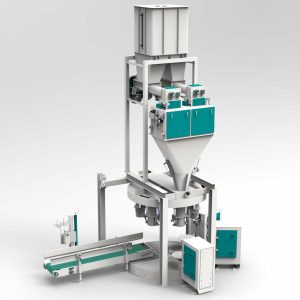
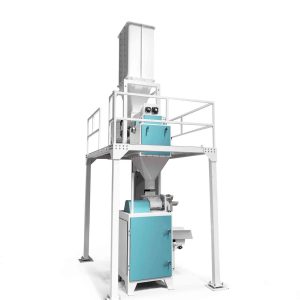
Valve Bag Filler Standard Features
• Electronic filling control system supported with 24 bit ADC.
• Equipped with Class III type stainless steel loadcells.
• Dry type pneumatic conditioners, pistons, valves and fittings.
• PLC controlled power and command control system cubicles.
• Equipped with touch screen user interface system
• Easy adjustable set value entry by operator.
• Programmable bag amount set.
• Easy weight calibration and multy recipe application according to product type.
• All surfaces are trated and coated by powder die in accordance to food codex.
• 800 lt capacity, fill end discharge level controlled material entry stock bin.
• High discharging capacity, high leakage insulated weigher bin. It is connected to loadcells by adjustable rods.
• At 25 kg filling mode 10-12 bag filling amount in a minute.
• Speed controlled transfer band with hydrolic manual height adjuster.
• Height adjustable chassis foots
• Modular and easy installable scale body and scale chassis.
• Aestetic, low maintenance required, stabile running
• Connection port for the filter (10 m3 / min capacity, suitable for suction).

A valve bag filler is a machine used for filling valve bags with various types of bulk materials such as powders, granules, and other free-flowing materials. Valve bags are typically made of paper or plastic and have a valve or sleeve that allows for easy and efficient filling.
Here’s how a typical valve bag filler works:
- Bag Placement: The empty valve bag is placed on the filling spout or nozzle of the machine.
- Bag Clamping: The bag is secured in place, often using clamps or other mechanisms to hold it steady during the filling process.
- Material Dispensing: The bulk material to be filled is dispensed into the bag through the filling spout. This can be achieved through various means, such as gravity feeding, auger filling, or pneumatic conveying.
- Weighing or Volume Measurement: Depending on the specific design of the bag filler, the machine may include a weighing system to ensure accurate filling. Alternatively, it may use volume measurement to achieve the desired fill level.
- Valve Closure: Once the bag reaches the desired fill level, the valve or sleeve on the bag is closed automatically. This closure is typically a one-way valve that prevents the material from escaping once the bag is removed from the filling spout.
- Bag Removal: The filled bag is then removed from the filling spout and can be sealed for transportation or further processing.
Valve bag fillers are commonly used in industries such as agriculture, chemicals, food processing, and construction materials. They offer advantages like efficient and precise filling, reduced dust emissions, and ease of handling for both the filling process and subsequent transportation.
It’s important to note that specific features and capabilities of valve bag filler may vary based on the manufacturer and the intended application.