 English
 Türkçe
 French
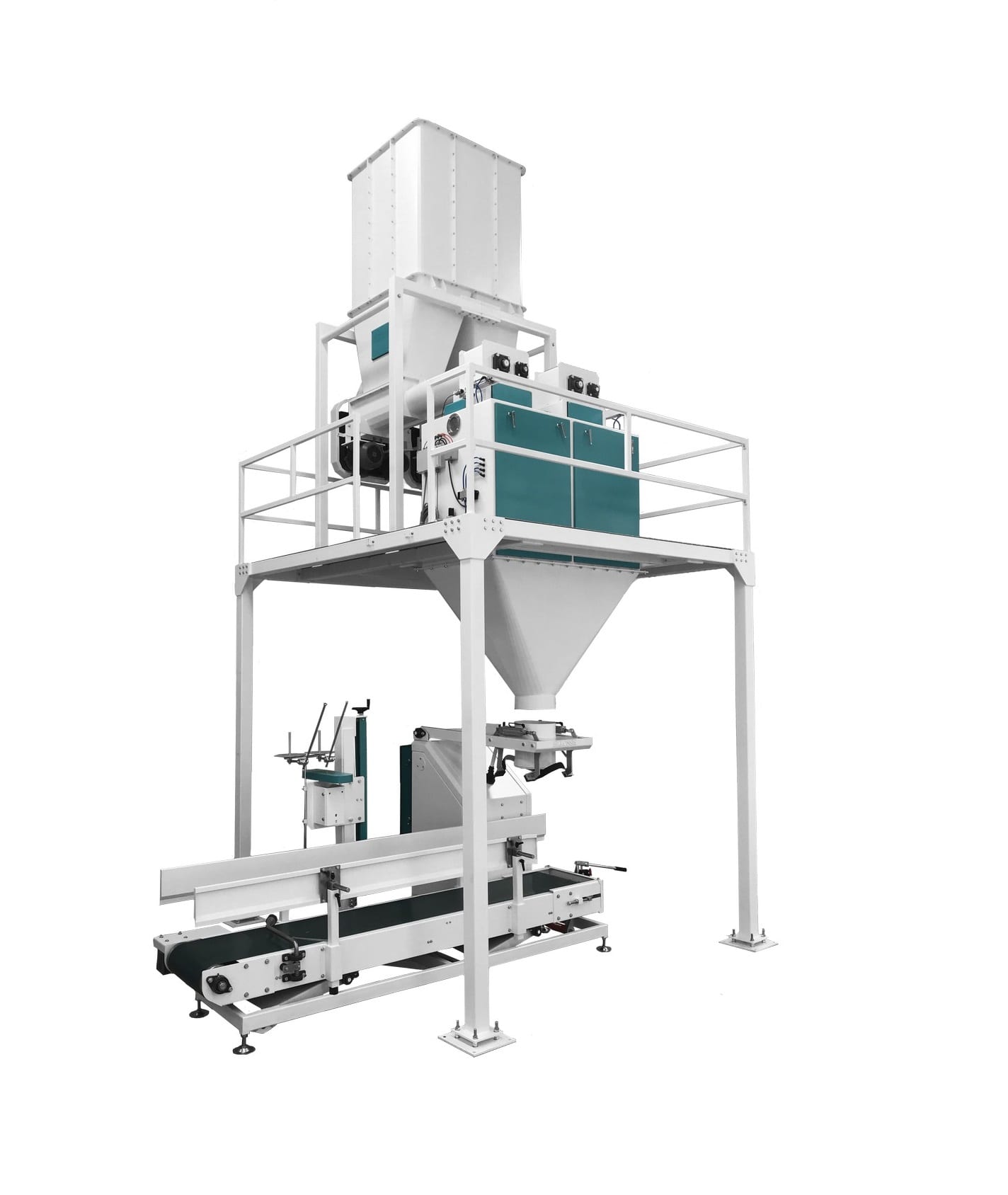
Description
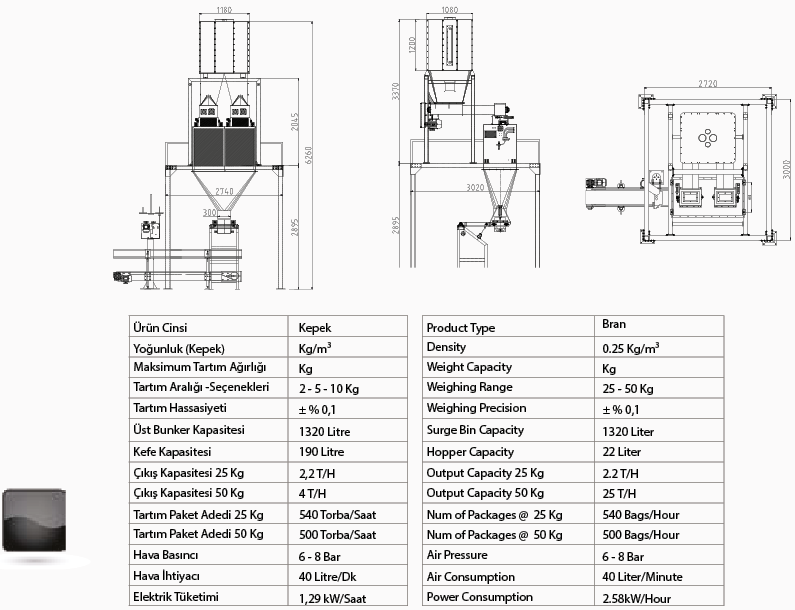
| Product Code | BS.DFSS.B25.50 |
| Weighing Range | 25-50 Kg |
| Weighing Accuracy | 25 Kg – 540 Bags/Hour, 50 Kg – 500 Bags/Hour |
| Bag Type | Polypropylene Bag |
| Weighing Capacity | 25 Kg – 540 Bags/Hour, 50 Kg – 500 Bags/Hour |
| Air Pressure | 5-6 Bar |
| Air Consumption | 40 Liter/Minute |
| Power Supply | 3 Ph, 380 VAC /50-60 Hz |
| Total Power | 8.45 Kw |
| Feeding Type | Auger |
Bran Packing Machine Standard Features
• Electronic filling control system supported with 24 bit ADC.
• Equipped with Class III type stainless steel loadcells.
• Dry type pneumatic conditioners, pistons, valves and fittings.
• PLC controlled power and command control system cubicles.
• Equipped with touch screen user interface system
• Easy adjustable set value entry by operator.
• Programmable bag amount set.
• Easy weight calibration and multy recipe application according to product type.
• All surfaces are trated and coated by powder die in accordance to food codex.
• 1320 lt capacity, fill end discharge level controlled material entry stock bin.
• High discharging capacity, high leakage insulated weigher bin. It is connected to loadcells by adjustable rods.
• At 25 kg filling mode 9-10 bag filling amount in a minute.
• Speed controlled transfer band with hydrolic manual height adjuster.
• Height adjustable chassis foots
• Modular and easy installable scale body and scale chassis.
• Aestetic, low maintenance required, stabile running
• Height adjustable sewing column.
Packaging bran efficiently and effectively is crucial for maintaining its freshness, preventing contamination, and ensuring product quality. Here is a general overview of the process involved in bran packing:
1. **Selection of Packaging Material:** – Choose appropriate packaging material based on the type of bran and the desired shelf life. Common packaging materials for bran include plastic bags, paper bags, or even bulk containers for larger quantities.
2. **Weighing and Measuring:** – Implement a weighing system to ensure accurate measurement of bran for each package. This can be done using automatic weighing machines or other measuring devices.
3. **Filling the Packaging:** – Bran is then filled into the selected packaging material. This process can be manual or automated, depending on the scale of production.
4. **Sealing:** – Seal the packaging to protect the bran from moisture, air, and contaminants. Common sealing methods include heat sealing for plastic bags or stitching for paper bags.
5. **Labeling:** – Apply labels to the packaging with essential information such as product name, nutritional information, batch/lot number, expiry date, and any other relevant details. Compliance with local regulations is important.
6. **Quality Control:** – Implement quality control measures to ensure that each packaged unit meets the required standards. This may involve visual inspections, weight checks, and other quality assurance procedures.
7. **Palletizing and Storage:** – Arrange the packaged bran onto pallets for easy storage and transportation. Properly store the packaged bran in a dry and cool environment to maintain its quality.
8. **Distribution:** – Distribute the packaged bran to retailers, wholesalers, or other points of sale. Ensure proper handling during transportation to avoid damage to the packaging.
It’s important to note that the specific details of the packaging process can vary depending on the scale of production, the type of bran being packaged, and the packaging machinery used. If you have more specific questions or requirements, please provide additional details for a more tailored response.


