English
 Türkçe
 French
Description
| Product Code | BS. BBDH |
| Bag Type | FIBC |
| Air Pressure | 5-6 Bar |
| Air Consumption | 120 Liter/Minute |
| Power Supply | 3 Ph, 380 VAC /50-60 Hz |
| Total Power | 5 Kw |
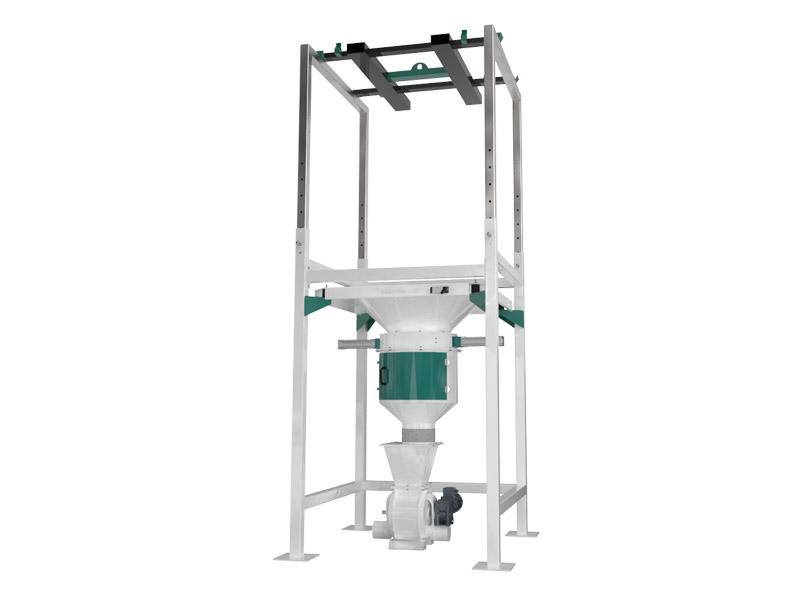
Bulk Bag Dischargher Standard Features
• 10-30 tons/hour Bigbag discharge capacity.
• Dry type pneumatic conditioners, pistons, valves and fittings.
• All surfaces are trated and coated by powder die in accordance to food codex.
• Big-Bag discharge cone and vibration unit
• Dust-tight debonding cabinet.
• 1000 lt capacity, fill end discharge level controlled material entry stock bin.
• Height and balance adjustable chassis column.
• Easy to install, modular strong body and chassis
• Modular and easy installable scale body and scale chassis.
• Aestetic, low maintenance required, stabile running
Optional Propoerties
• Iris valve for adjustable flow of material to bag
• 2 Ton lifting capacity electric hoist
• Rail carrier for Power and Control cables
A bulk bag discharger, also known as a bulk bag unloader or FIBC (Flexible Intermediate Bulk Container) discharger, is a material handling equipment designed to efficiently unload bulk bags or super sacks. Bulk bags are large, flexible containers used to transport and store dry bulk materials such as powders, granules, or flakes. The bulk bag discharger facilitates the controlled and efficient discharge of the material from the bag into downstream processes.
Here are some key features and components commonly found in bulk bag dischargers:
- Frame Structure: Bulk bag dischargers typically have a sturdy frame structure that supports the bulk bag during the unloading process. The frame may include adjustable arms or hooks to secure the bag in place.
- Bag Handling Mechanism: There are various mechanisms for handling the bulk bag, such as hoists, forklifts, or cranes, depending on the design of the discharger. Some systems have automated features to lift and position the bag for discharge.
- Bag Untying Mechanism: Bulk bags are usually tied at the top to prevent contamination and ensure safe transportation. Bulk bag dischargers often include a mechanism for easy untying of the bag, such as a bag spout interface, clamps, or cutting devices.
- Flow Aids: To promote consistent and controlled material discharge, bulk bag dischargers may incorporate flow aids such as vibration devices, pneumatic paddles, or agitators.
- Dust Collection System: Since bulk materials can generate dust during the unloading process, many bulk bag dischargers include dust collection systems to capture and control airborne particles, ensuring a safe working environment.
- Material Transfer System: Once the material is discharged from the bulk bag, it needs to be transferred to downstream processes or storage. This may involve conveyors, augers, or other material transfer systems.
- Controls and Automation: Modern bulk bag dischargers often come with control systems that allow for automation of the unloading process. This can include features such as variable speed control, bag tension adjustment, and automated material transfer.
- Safety Features: Safety is a critical consideration in the design of bulk bag dischargers. This may include features such as interlocks to prevent operation when not properly secured, emergency stop buttons, and safety guarding.
Bulk bag dischargers are used in various industries, including food and beverage, pharmaceuticals, chemicals, agriculture, and more, wherever bulk materials need to be efficiently and safely unloaded for further processing or packaging.