 English
 Türkçe
 French

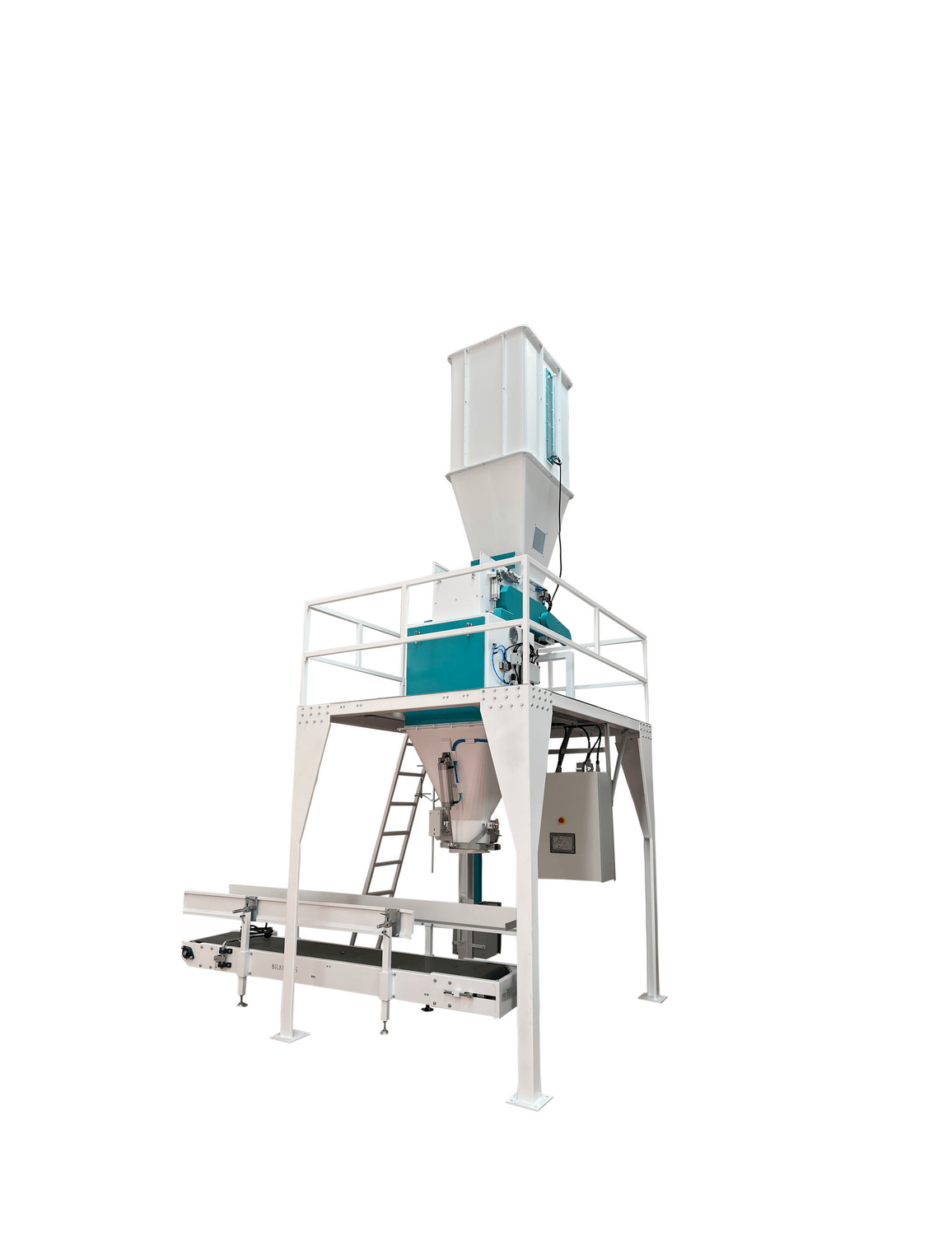
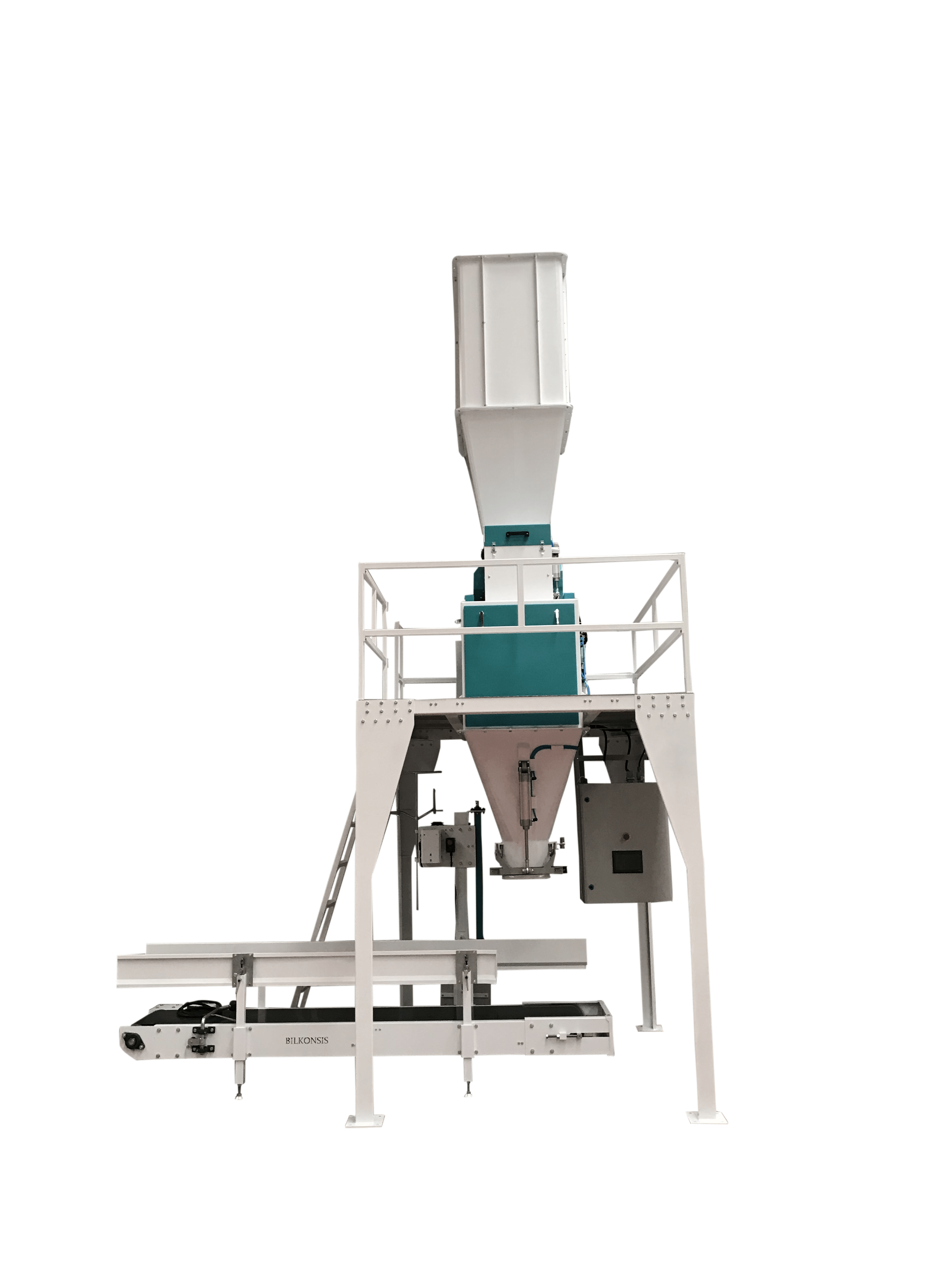
Description
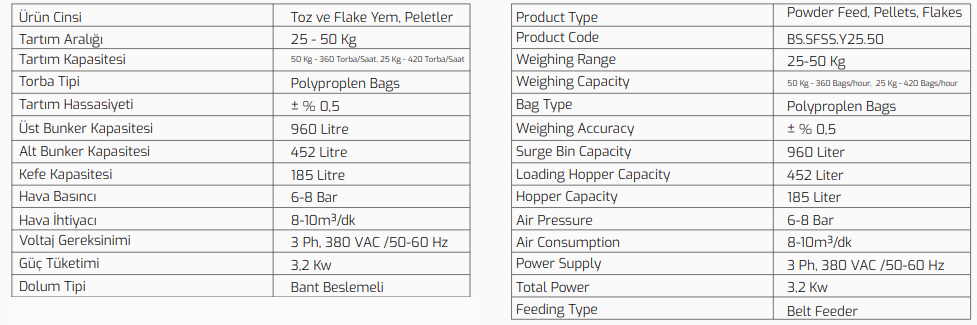
| Product Code | BS.SFSS.Y25.50 |
| Weighing Range | 25-50 Kg |
| Weighing Accuracy | ± % 0.2 |
| Bag Type | Polypropylene Bag |
| Weighing Capacity | 25 Kg – 420 Bags/Hour, 50 Kg – 360 Bags/Hour |
| Air Pressure | 5-6 Bar |
| Air Consumption | 80 Liter/Minute |
| Power Supply | 3 Ph, 380 VAC /50-60 Hz |
| Total Power | 3.2 Kw |
| Feeding Type | Belt Feeder |
Feed Packing Machine Standard Features
Product Code – BS.SFSS.Y25.50
Weighing Range – 25-50 Kg
Weighing Capacity – 25 Kg – 420 Bags/hour, 50 Kg – 360 Bags/hour
Bag Type Polyproplen Bags
Weighing Accuracy ± % 0,5
Air Pressure 6-8 Bar
Air Consumption 80 m3/dk
Power Supply 3 Ph, 380 VAC /50-60 Hz
Total Power – 3,2 Kw
Standard Features
- Filling weighing system supported by 24-bit ADC.
- Equipped with Class III type stainless steel loadcells.
- Dry type pneumatic conditioners, pistons, valves and fittings.
- PLC controlled power and command control system cubicles.
- Equipped with touch screen user interface system
- Easy adjustable set value entry by operator.
- Programmable bag amount set.
- Easy weight calibration and multy recipe application according to product type.
- All surfaces are trated and coated by powder die in accordance to food codex.
- 960 lt capacity, fill end discharge level controlled material entry stock bin.
- High discharging capacity, high leakage insulated weigher bin. It is connected to loadcells by adjustable rods
- At 50 kg filling mode 6-7 bag filling amount in a minute.
- Speed controlled transfer band with hydrolic manual height adjuster.
- Height adjustable chassis foots
- Height adjustable sewing column.
- Modular and easy installable scale body and scale chassis.
- Aestetic, low maintenance required, stabile running
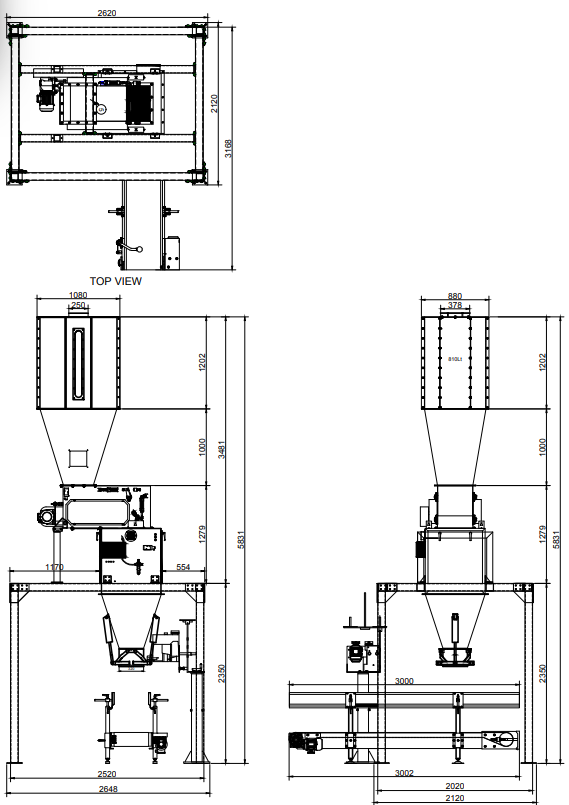
What is Feed Packaging Machine
A feed Packaging machine is a piece of equipment designed to efficiently and accurately pack various types of feed, such as animal feed, pet food, or aquaculture feed, into bags or other containers. These machines are commonly used in feed manufacturing facilities to automate the packaging process, ensuring consistency and precision. Here are some key features and considerations related to feed packing machines:
- Weighing System: Feed packing machines typically include a weighing system to measure and dispense the correct amount of feed into each bag. This ensures that the bags are filled with the specified weight of feed, meeting quality standards and regulatory requirements.
- Bagging Mechanism: The bagging mechanism is responsible for filling and sealing the bags. This can involve a variety of techniques, such as gravity feeding, auger filling, or pneumatic conveying. The choice of mechanism depends on the type of feed being packed and the desired packaging speed.
- Bag Sealing: After filling, the machine should seal the bags securely to prevent spillage and maintain the freshness of the feed. Common sealing methods include heat sealing and sewing.
- Packaging Speed: The packaging speed is an important consideration, especially in large-scale feed production facilities. Machines can vary widely in terms of the number of bags they can fill per minute, so choosing a machine with an appropriate packaging speed is essential.
- Flexibility: Some feed packing machines are designed to handle different types and sizes of bags. This flexibility is useful for feed manufacturers who produce a variety of feed formulations and package sizes.
- Accuracy and Precision: Accuracy in weighing and precision in bag filling are crucial to ensure that each bag contains the correct amount of feed. This helps maintain consistency in the quality of the product.
- User Interface and Controls: An intuitive user interface and controls are essential for easy operation and adjustment of the machine settings. This includes features such as touchscreens, programmable logic controllers (PLCs), and user-friendly software.
- Maintenance and Cleaning: Easy maintenance and cleaning procedures are important for keeping the machine in good working condition. This can contribute to prolonged equipment life and consistent performance.
- Compliance with Regulations: Ensure that the feed Packaging machine complies with relevant industry regulations and standards. This is particularly important in industries where strict quality control and traceability are required.
- Integration with Production Line: If the feed packing machine is part of a larger production line, it should be seamlessly integrated with other equipment to optimize overall efficiency.
When selecting a feed Packaging machine, it’s important to consider the specific needs and production requirements of your facility. Additionally, consulting with manufacturers or suppliers can provide valuable insights into the most suitable machine for your application.


